
Quick answer: Expert Home Tuition is a personalised way of supporting a student at home with focused academic guidance. Instead of following exactly the same pace as a full classroom, home tuition can give a student more time to ask questions, practise difficult topics and revise according to individual needs. For parents, the key is to choose a structured learning approach rather than simply adding more study hours.
What Makes Expert Home Tuition Different?
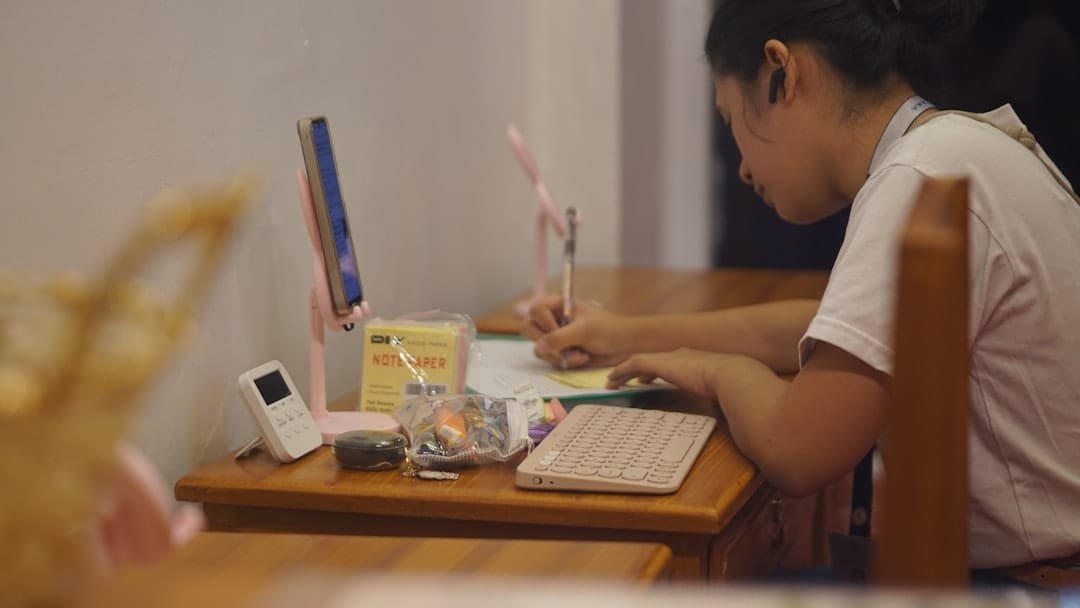
The main difference is individual attention. A tutor can identify which topics a student understands, which concepts need explanation and where additional practice is required. The lesson can then be adjusted around the student’s current level, school syllabus and upcoming assessments. This can be especially useful when a student is confident in one subject but needs more support in another.
- A lesson plan based on the student’s current academic needs
- More opportunity to ask questions and clarify concepts
- Targeted practice instead of repeating work the student already knows
- Regular revision and progress discussions
- A quieter home-learning environment with fewer classroom distractions
How Parents Can Make Home Tuition More Effective



Home tuition works best when tutoring, schoolwork and independent practice support one another. Parents can help by keeping a consistent study time, sharing relevant school information with the tutor and encouraging the student to complete agreed practice work. Progress should be reviewed using practical indicators such as completed topics, accuracy, confidence and performance in school assessments.
Key points for parents and students
- Keep lessons focused on real academic needs.
- Use regular practice and revision between lessons.
- Review progress using completed work, accuracy and understanding.
- Adjust the plan when the student’s needs change.
For related guidance, parents can also read our guide to choosing a home tutor and our article on monthly progress reviews. Official learning resources are available through NCERT.
Personalisation starts with understanding the learner before deciding what to teach. Two students in the same class can have very different needs. One may need foundational explanations, another may understand the concepts but lose marks through careless mistakes, and another may mainly need a regular revision routine. Expert Home Tuition can respond to these differences by using the student’s schoolwork, homework, recent tests and questions as practical evidence. This makes the learning plan more relevant than simply repeating the same material for every student.
A useful first stage is a learning-needs discussion. Parents can explain the student’s class, subjects, board, school schedule and immediate concerns. The student can identify chapters that feel difficult and explain where they usually become stuck. The tutor can then decide which areas should receive early attention. This does not need to be a formal examination. Even a careful review of recent work can reveal whether the problem is conceptual understanding, practice, memory, written presentation or study organisation.
Once the starting point is clear, each lesson can have a simple objective. A session might focus on understanding one difficult concept, practising a question type, reviewing a previous mistake or preparing for an upcoming school assessment. Clear objectives make it easier for the student to know what is expected. They also help parents understand what tuition is actually doing. Over time, a series of small objectives can create meaningful progress without making every lesson feel like a major test.
Explanation should be followed by active participation. A student can listen to an explanation and still be unable to solve a new question independently. For that reason, the tutor can explain a concept, demonstrate one example, ask the student to solve a similar example and then gradually remove assistance. This sequence reveals whether the student has actually understood the method. It also gives the learner repeated opportunities to make mistakes safely and learn how to correct them.
Questions should be used diagnostically. If a student gives a wrong answer, the next step is not always another worksheet. The tutor can ask the student to explain the reasoning. This may reveal a misunderstanding of the concept, a skipped step, a calculation error or difficulty interpreting the question. Each cause requires a different response. Personalised tuition becomes more useful when practice is selected because it addresses an identified need rather than simply because a large number of questions is available.
Home tuition can also help students connect school learning with independent study. A school lesson introduces the topic, homework provides practice and tuition can clarify gaps or organise additional work. The student should still use school notes, textbooks and assigned material as important references. Expert Home Tuition should complement the school programme rather than create a completely separate syllabus. This approach can reduce duplication and keep the student’s time focused on the areas where additional support is genuinely useful.
Parents can make the arrangement more effective by sharing relevant information without taking over the learning process. If a test is approaching, the tutor should know which chapters are included. If the student is struggling with a particular type of homework question, that information can guide the next lesson. At the same time, students need enough responsibility to explain their own difficulties and complete independent practice. The aim is cooperation between parent, student and tutor rather than constant supervision.
A consistent study environment can make lessons more productive. The student should have the necessary books, notebooks, stationery and school material available before the session begins. A reasonably quiet place can reduce interruptions. The environment does not need to resemble a formal classroom. What matters is that the learner knows where and when study happens and can move into the lesson without spending unnecessary time preparing the space.
Time management is another part of personalised learning. Students have school, homework, tuition, activities, family responsibilities and rest. A realistic timetable should protect all of these needs. If the plan is too demanding, attendance and independent practice may suffer. The tutor can help identify which tasks are essential and which can be shortened or moved. A sustainable routine is generally more useful than a schedule that looks impressive on paper but cannot be followed for several weeks.
Revision should be built into the learning cycle from the beginning. A topic should not disappear from the plan immediately after it is taught. Short reviews can bring older material back into active memory. Students can explain the idea without notes, answer a few mixed questions or correct previous mistakes. These small reviews are especially useful when subjects contain many connected chapters. They also help the tutor identify whether a concept that seemed clear earlier has actually been retained.
Progress can be measured in several ways. Parents can look at whether difficult topics are being completed, whether homework is becoming more manageable, whether practice accuracy is improving and whether the student is attempting unfamiliar questions with less hesitation. School tests and examinations provide another source of evidence, but one mark should not be treated as the only measure of learning. A broader review can show which skills are improving and which still require attention.
Students should gradually become more independent as they improve. Early lessons may require frequent prompts, worked examples and guided practice. Later, the student can be asked to plan the approach, attempt the problem and check the answer independently. This gradual transfer of responsibility is important because the long-term purpose of tuition is not to make the student dependent on a tutor. It is to help the learner develop methods that can be used without direct assistance.
Personalised tuition can also support confidence in a practical way. Confidence should come from evidence that the student can understand a concept, complete a task and recover from a mistake. Empty reassurance is less useful than showing a learner that a previously difficult question can now be solved independently. Tutors can acknowledge effort, explain why an improvement occurred and encourage the student to apply the same strategy to a new problem.
Families in Chandigarh, Panchkula, Mohali and Zirakpur can discuss local scheduling requirements while keeping the academic plan centred on the student. Location is useful for arranging practical home tuition, but the quality of the learning plan depends on matching the service to the learner’s class, subjects and needs. Parents can therefore provide accurate details at enquiry stage rather than assuming that one arrangement will suit every student.
For curriculum reference, students should continue to follow their school and the current requirements of the relevant board. Families using CBSE or NCERT-linked resources can refer to official materials and then use tuition to clarify concepts, practise questions and organise revision. This keeps the source of curriculum information clear while allowing the tutoring process to remain personalised.
Finally, a useful home-learning plan should be reviewed rather than treated as permanent. A student may begin by needing basic concept support and later move towards mixed practice and examination preparation. Another student may need a temporary increase in revision before assessments and then return to a lighter routine. Regular communication allows the plan to change when the learner’s situation changes. Expert Home Tuition is most useful when it remains focused, evidence-based and connected to the student’s real academic work.
An effective personalised plan can also distinguish between teaching time and revision time. A student who has never understood a topic may need a slower explanation and several guided examples. A student who already understands it may need only a short review followed by independent questions. This distinction prevents valuable lesson time from being spent on material that is already secure.
Parents can encourage students to keep a small list of questions between sessions. Instead of interrupting every study task, the learner can mark the point of difficulty and bring it to the next lesson. This simple habit teaches students to notice their own learning needs and makes the tutor’s time more focused.
Personalised learning should also account for assessment style. A student may understand a concept orally but struggle to present it in a written answer. Another may solve a problem correctly but take too long. Tuition can therefore include explanation, written practice, timed work and self-checking when these skills are relevant to the student’s current academic requirements.
The learning plan can change across the school year. Early in a term, the emphasis may be understanding new chapters and completing homework. Before examinations, revision and mixed practice can become more important. After an assessment, mistakes can be reviewed and the next set of priorities established. This flexibility keeps the service useful instead of forcing every week into the same pattern.
Parents should also recognise that the student’s participation matters. A tutor can provide explanation and feedback, but the learner must attempt questions, revise and use the strategies independently. Encouraging responsibility in small steps helps prevent tuition from becoming the only place where academic work happens.
In this way, Expert Home Tuition can function as a bridge between school teaching and independent learning. The most useful arrangement is one in which the student gradually needs fewer prompts, understands how to practise effectively and becomes better able to manage academic tasks outside the tuition session.
Another useful feature of personalised tuition is the ability to respond to feedback quickly. If a student performs poorly on one assessment, the next lesson can examine the questions rather than simply repeating the entire chapter. If performance improves, the plan can move forward. This responsiveness helps keep tuition connected to real academic evidence throughout the school year.
Students can also learn to describe their own learning needs more precisely. Saying “this chapter is difficult” can become “I understand the first method but cannot decide which method to use in mixed questions.” That clearer description helps the tutor choose a more targeted activity and teaches the learner a valuable self-monitoring skill.
For parents, the practical value of Expert Home Tuition is therefore found in the quality of the learning process. Clear goals, active practice, useful feedback and gradual independence can turn additional study time into purposeful academic support.
Conclusion
Expert Home Tuition should be viewed as a structured learning support system, not simply extra study time. With clear goals, personalised explanations, regular practice and sensible progress reviews, families can create a more organised approach to school learning. For enquiries about home tuition, parents can contact Expert Home Tuition at 7307306981 or visit ExpertHomeTuition.com.
