
Quick answer: home tuition for class 12 electrostatics works when teaching connects actual syllabus questions with clear reasoning, a suitable worked example and an independent follow-up. This guide explains the key electric charges, fields and potential ideas, classroom-style examples, common misconceptions, a flexible learning timetable and parent checks.
Electrostatics is demanding because vector directions, force, field and potential must be kept distinct. A reliable teaching sequence begins with conceptual diagrams and units before introducing symbolic equations or numerical calculations. The learner should be able to explain what a method means, when it applies and what would make an answer incorrect. A tutor can adjust the pace to the student’s classwork rather than adding a separate syllabus that competes with school homework.
Parents considering one-to-one Physics support in Zirakpur should discuss the learner’s current school board, textbooks and difficulty areas. A few dated examples of actual work are more useful than a general claim that the student needs more practice. Focus on progress that can be observed rather than promises of examination scores.
What the student needs to understand first

The foundation of electric charges, fields and potential is not a memorised worksheet. It is a set of small ideas that connect to each other. A learner may show one skill while still needing support with the next. Before deciding the pace, the tutor should ask the student to explain one familiar task, attempt a new task and compare both attempts. A useful assessment is short, specific and reassuring. The result identifies where to teach next; it should never be used to label a child as weak or incapable.
Foundation 1: differentiate charge from electric field. Begin by asking the learner what this skill means, then ask for one carefully chosen textbook example. The tutor should explain the reasoning step by step, point to any relevant representation, and show how an incorrect shortcut would fail. The student then attempts a changed example without copying the first. A final explanation in the student’s own words checks understanding. For Physics, correct terminology matters, but it should grow from the idea instead of replacing it. Keep a dated sample of independent work and use it to decide the next task.
Foundation 2: apply Coulomb’s law with units and signs. Begin by asking the learner what this skill means, then ask for one carefully chosen textbook example. The tutor should explain the reasoning step by step, point to any relevant representation, and show how an incorrect shortcut would fail. The student then attempts a changed example without copying the first. A final explanation in the student’s own words checks understanding. For Physics, correct terminology matters, but it should grow from the idea instead of replacing it. Keep a dated sample of independent work and use it to decide the next task.
Foundation 3: draw electric-field directions carefully. Begin by asking the learner what this skill means, then ask for one carefully chosen textbook example. The tutor should explain the reasoning step by step, point to any relevant representation, and show how an incorrect shortcut would fail. The student then attempts a changed example without copying the first. A final explanation in the student’s own words checks understanding. For Physics, correct terminology matters, but it should grow from the idea instead of replacing it. Keep a dated sample of independent work and use it to decide the next task.
Foundation 4: use superposition in simple configurations. Begin by asking the learner what this skill means, then ask for one carefully chosen textbook example. The tutor should explain the reasoning step by step, point to any relevant representation, and show how an incorrect shortcut would fail. The student then attempts a changed example without copying the first. A final explanation in the student’s own words checks understanding. For Physics, correct terminology matters, but it should grow from the idea instead of replacing it. Keep a dated sample of independent work and use it to decide the next task.
Foundation 5: distinguish scalar potential from vector field. Begin by asking the learner what this skill means, then ask for one carefully chosen textbook example. The tutor should explain the reasoning step by step, point to any relevant representation, and show how an incorrect shortcut would fail. The student then attempts a changed example without copying the first. A final explanation in the student’s own words checks understanding. For Physics, correct terminology matters, but it should grow from the idea instead of replacing it. Keep a dated sample of independent work and use it to decide the next task.
Foundation 6: explain capacitance using charge and potential difference. Begin by asking the learner what this skill means, then ask for one carefully chosen textbook example. The tutor should explain the reasoning step by step, point to any relevant representation, and show how an incorrect shortcut would fail. The student then attempts a changed example without copying the first. A final explanation in the student’s own words checks understanding. For Physics, correct terminology matters, but it should grow from the idea instead of replacing it. Keep a dated sample of independent work and use it to decide the next task.
A baseline record can use three labels: independent, needs a prompt, and not yet secure. These are easier for a parent to interpret than a claimed percentage gain. For Physics, retain one dated example for each of the major learning targets. After several weeks, compare it with a new example of similar difficulty. Because every child’s starting point and school demands differ, avoid fixed claims about how quickly progress must occur.
Four worked activities parents can actually try
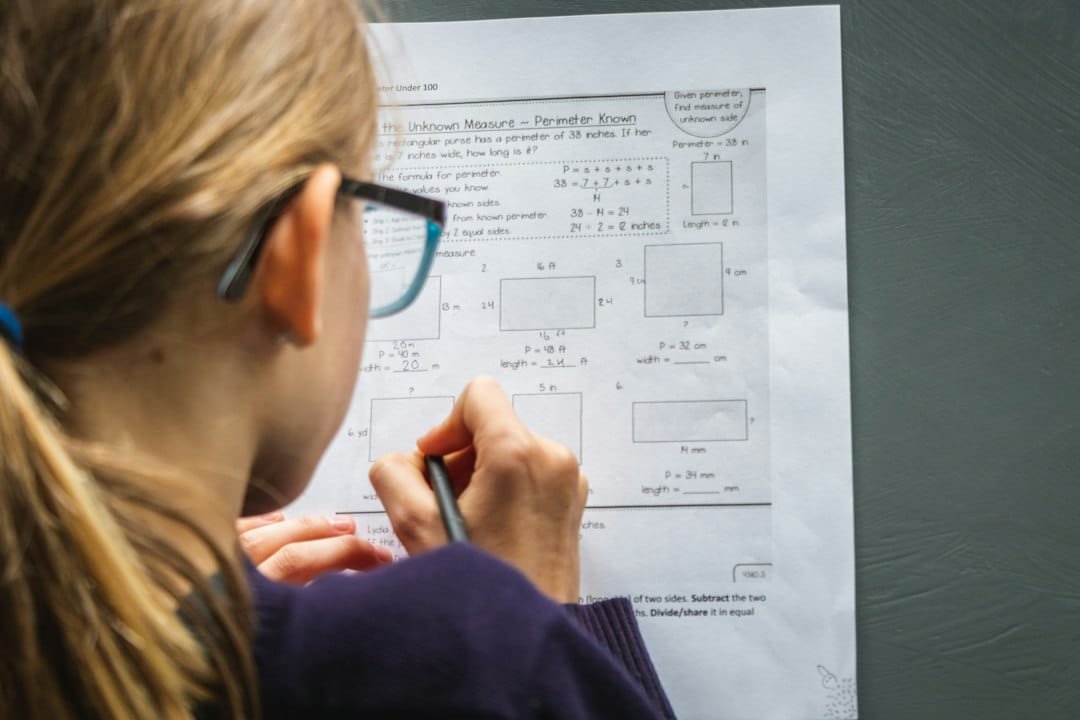
Worked activities help a student see why a method is chosen. They should be short enough to discuss in one lesson and varied enough to test understanding. The following are example activities, not recordings of real pupils. A tutor can change the vocabulary, numbers, pictures or difficulty to match the current textbook. In each activity, an adult first models an idea and then gradually hands responsibility back to the learner.
Activity 1: Two positive charges are placed near each other. What is the force direction? Draw outward repulsion arrows on both charges along the line joining them and then discuss relative magnitudes. Like charges repel; a magnitude formula alone cannot answer the direction question. Ask the student to identify the information needed and to justify the method before checking the answer. If the learner needs a prompt, record where and why. Then make a similar question with a different number, example or diagram and ask for independent reasoning. This helps distinguish genuine understanding from following a memorised solution. A student can also explain an answer to a parent using simple language, but the parent need not know the entire subject to listen for a clear, coherent explanation.
For this activity, keep the first attempt, including any incomplete reasoning, and compare it with the revised work. Ask which clue, model or statement made the difference. A student who can copy a completed solution but cannot explain it needs a different follow-up from a student who understands the method but makes a minor presentation error. Parents can support the activity by listening to the explanation without correcting every word. The teacher should decide when a further challenge is suitable and when a simpler example is needed.
Activity 2: What is the electric field due to a positive point charge? Sketch radial arrows pointing away from the charge and label a test point in the surrounding region. Field direction is the force direction on a positive test charge, not the direction a negative charge necessarily moves. Ask the student to identify the information needed and to justify the method before checking the answer. If the learner needs a prompt, record where and why. Then make a similar question with a different number, example or diagram and ask for independent reasoning. This helps distinguish genuine understanding from following a memorised solution. A student can also explain an answer to a parent using simple language, but the parent need not know the entire subject to listen for a clear, coherent explanation.
For this activity, keep the first attempt, including any incomplete reasoning, and compare it with the revised work. Ask which clue, model or statement made the difference. A student who can copy a completed solution but cannot explain it needs a different follow-up from a student who understands the method but makes a minor presentation error. Parents can support the activity by listening to the explanation without correcting every word. The teacher should decide when a further challenge is suitable and when a simpler example is needed.
Activity 3: Why can electric potential be added algebraically? Explain that potential is a scalar, unlike electric field, whose contributions must account for direction. A numerical sign matters for potential, while directions matter for field. Ask the student to identify the information needed and to justify the method before checking the answer. If the learner needs a prompt, record where and why. Then make a similar question with a different number, example or diagram and ask for independent reasoning. This helps distinguish genuine understanding from following a memorised solution. A student can also explain an answer to a parent using simple language, but the parent need not know the entire subject to listen for a clear, coherent explanation.
For this activity, keep the first attempt, including any incomplete reasoning, and compare it with the revised work. Ask which clue, model or statement made the difference. A student who can copy a completed solution but cannot explain it needs a different follow-up from a student who understands the method but makes a minor presentation error. Parents can support the activity by listening to the explanation without correcting every word. The teacher should decide when a further challenge is suitable and when a simpler example is needed.
Activity 4: How does a capacitor’s capacitance relate to charge and potential difference? Use C = Q/V for the magnitude relationship under the appropriate model and identify coulombs, volts and farads. Capacitance is not simply the total charge; the ratio is central to the definition. Ask the student to identify the information needed and to justify the method before checking the answer. If the learner needs a prompt, record where and why. Then make a similar question with a different number, example or diagram and ask for independent reasoning. This helps distinguish genuine understanding from following a memorised solution. A student can also explain an answer to a parent using simple language, but the parent need not know the entire subject to listen for a clear, coherent explanation.
For this activity, keep the first attempt, including any incomplete reasoning, and compare it with the revised work. Ask which clue, model or statement made the difference. A student who can copy a completed solution but cannot explain it needs a different follow-up from a student who understands the method but makes a minor presentation error. Parents can support the activity by listening to the explanation without correcting every word. The teacher should decide when a further challenge is suitable and when a simpler example is needed.
Common learning mistakes and how a tutor can address them

An error is useful evidence about a learner’s thinking. Treating every incorrect answer as carelessness hides important patterns. In electric charges, fields and potential, a small misunderstanding can reappear in multiple exercises. A tutor should look for the earliest questionable decision, ask the student what they intended and then offer a concrete comparison. This approach separates missing knowledge from reading difficulties, rushed work or unclear instructions.
Common error 1: treats field and potential as the same type of quantity. Show the student an example where this approach gives the wrong interpretation or result. Ask the learner which assumption caused the problem and invite a more accurate method using the textbook. Review the corrected reasoning, but do not erase the first attempt; it can show learning over time. A tutor should bring the pattern back in a later session with changed wording to test whether the correction lasts. The objective is more independent checking, not punishing a mistake or claiming a guaranteed mark increase.
To see whether the correction will last, revisit this pattern after a few days in an exercise that looks different from the original. If the problem returns, check whether the previous explanation was too abstract or expected a prerequisite that the learner has not mastered. A new drawing, physical model, shorter passage or real-life example can help. A tutor should also explain the observation to parents in simple terms: what the student can now do without help and what the next lesson will examine.
Common error 2: forgets to draw force or field direction. Show the student an example where this approach gives the wrong interpretation or result. Ask the learner which assumption caused the problem and invite a more accurate method using the textbook. Review the corrected reasoning, but do not erase the first attempt; it can show learning over time. A tutor should bring the pattern back in a later session with changed wording to test whether the correction lasts. The objective is more independent checking, not punishing a mistake or claiming a guaranteed mark increase.
To see whether the correction will last, revisit this pattern after a few days in an exercise that looks different from the original. If the problem returns, check whether the previous explanation was too abstract or expected a prerequisite that the learner has not mastered. A new drawing, physical model, shorter passage or real-life example can help. A tutor should also explain the observation to parents in simple terms: what the student can now do without help and what the next lesson will examine.
Common error 3: adds vector field magnitudes without considering orientation. Show the student an example where this approach gives the wrong interpretation or result. Ask the learner which assumption caused the problem and invite a more accurate method using the textbook. Review the corrected reasoning, but do not erase the first attempt; it can show learning over time. A tutor should bring the pattern back in a later session with changed wording to test whether the correction lasts. The objective is more independent checking, not punishing a mistake or claiming a guaranteed mark increase.
To see whether the correction will last, revisit this pattern after a few days in an exercise that looks different from the original. If the problem returns, check whether the previous explanation was too abstract or expected a prerequisite that the learner has not mastered. A new drawing, physical model, shorter passage or real-life example can help. A tutor should also explain the observation to parents in simple terms: what the student can now do without help and what the next lesson will examine.
Common error 4: substitutes values without first checking SI units. Show the student an example where this approach gives the wrong interpretation or result. Ask the learner which assumption caused the problem and invite a more accurate method using the textbook. Review the corrected reasoning, but do not erase the first attempt; it can show learning over time. A tutor should bring the pattern back in a later session with changed wording to test whether the correction lasts. The objective is more independent checking, not punishing a mistake or claiming a guaranteed mark increase.
To see whether the correction will last, revisit this pattern after a few days in an exercise that looks different from the original. If the problem returns, check whether the previous explanation was too abstract or expected a prerequisite that the learner has not mastered. A new drawing, physical model, shorter passage or real-life example can help. A tutor should also explain the observation to parents in simple terms: what the student can now do without help and what the next lesson will examine.
A six-week Class 12 home tuition lesson plan

This sequence is a planning example that can be shortened or extended. It should follow the current school chapter order where possible and must not replace the teacher’s prescribed lessons. A weekly meeting is not complete simply because a new topic was covered: time for retrieval, fresh application and clear feedback belongs in every stage. A child may need longer on a particular idea without that being a setback.
Week 1 — charge, conductors and basic laws. Open with a short retrieval question from an earlier lesson. Discuss the week’s central idea using a visual, worked calculation, passage or diagram as appropriate. Give a guided question and a second independent question. Conclude with a short oral or written explanation of what the learner understood and which step still needs revision. The tutor should keep the exercise, note any help provided and check the same idea in a changed example later. This stage can be extended when the school schedule or the student’s comprehension calls for it.
Between lessons, use a short retrieval task tied to this week’s skill and one question that revisits an earlier skill. A parent can make space for the task but should avoid completing the work. When a learner becomes tired or repeatedly confused, reduce the quantity and ask the tutor to adjust the next session. For Class 12, appropriate practice depends on the child’s routine, maturity and school homework, not a rigid daily page count.
Week 2 — Coulomb’s law and force diagrams. Open with a short retrieval question from an earlier lesson. Discuss the week’s central idea using a visual, worked calculation, passage or diagram as appropriate. Give a guided question and a second independent question. Conclude with a short oral or written explanation of what the learner understood and which step still needs revision. The tutor should keep the exercise, note any help provided and check the same idea in a changed example later. This stage can be extended when the school schedule or the student’s comprehension calls for it.
Between lessons, use a short retrieval task tied to this week’s skill and one question that revisits an earlier skill. A parent can make space for the task but should avoid completing the work. When a learner becomes tired or repeatedly confused, reduce the quantity and ask the tutor to adjust the next session. For Class 12, appropriate practice depends on the child’s routine, maturity and school homework, not a rigid daily page count.
Week 3 — electric field and field lines. Open with a short retrieval question from an earlier lesson. Discuss the week’s central idea using a visual, worked calculation, passage or diagram as appropriate. Give a guided question and a second independent question. Conclude with a short oral or written explanation of what the learner understood and which step still needs revision. The tutor should keep the exercise, note any help provided and check the same idea in a changed example later. This stage can be extended when the school schedule or the student’s comprehension calls for it.
Between lessons, use a short retrieval task tied to this week’s skill and one question that revisits an earlier skill. A parent can make space for the task but should avoid completing the work. When a learner becomes tired or repeatedly confused, reduce the quantity and ask the tutor to adjust the next session. For Class 12, appropriate practice depends on the child’s routine, maturity and school homework, not a rigid daily page count.
Week 4 — superposition with clear vectors. Open with a short retrieval question from an earlier lesson. Discuss the week’s central idea using a visual, worked calculation, passage or diagram as appropriate. Give a guided question and a second independent question. Conclude with a short oral or written explanation of what the learner understood and which step still needs revision. The tutor should keep the exercise, note any help provided and check the same idea in a changed example later. This stage can be extended when the school schedule or the student’s comprehension calls for it.
Between lessons, use a short retrieval task tied to this week’s skill and one question that revisits an earlier skill. A parent can make space for the task but should avoid completing the work. When a learner becomes tired or repeatedly confused, reduce the quantity and ask the tutor to adjust the next session. For Class 12, appropriate practice depends on the child’s routine, maturity and school homework, not a rigid daily page count.
Week 5 — potential and potential difference. Open with a short retrieval question from an earlier lesson. Discuss the week’s central idea using a visual, worked calculation, passage or diagram as appropriate. Give a guided question and a second independent question. Conclude with a short oral or written explanation of what the learner understood and which step still needs revision. The tutor should keep the exercise, note any help provided and check the same idea in a changed example later. This stage can be extended when the school schedule or the student’s comprehension calls for it.
Between lessons, use a short retrieval task tied to this week’s skill and one question that revisits an earlier skill. A parent can make space for the task but should avoid completing the work. When a learner becomes tired or repeatedly confused, reduce the quantity and ask the tutor to adjust the next session. For Class 12, appropriate practice depends on the child’s routine, maturity and school homework, not a rigid daily page count.
Week 6 — capacitors and mixed numerical practice. Open with a short retrieval question from an earlier lesson. Discuss the week’s central idea using a visual, worked calculation, passage or diagram as appropriate. Give a guided question and a second independent question. Conclude with a short oral or written explanation of what the learner understood and which step still needs revision. The tutor should keep the exercise, note any help provided and check the same idea in a changed example later. This stage can be extended when the school schedule or the student’s comprehension calls for it.
Between lessons, use a short retrieval task tied to this week’s skill and one question that revisits an earlier skill. A parent can make space for the task but should avoid completing the work. When a learner becomes tired or repeatedly confused, reduce the quantity and ask the tutor to adjust the next session. For Class 12, appropriate practice depends on the child’s routine, maturity and school homework, not a rigid daily page count.
At the end of week six, compare independent work with the initial baseline. Ask for an explanation of a fresh example, not just a repeat of the original exercise. Look for more accurate use of the relevant vocabulary, better selection of methods and more confident self-checking. If the student still needs repeated prompts for a particular step, return to that step with a different representation. Honest feedback is more useful than promises of a fixed exam result.
Home practice, parent questions and choosing local tuition

Home practice: Use paper diagrams and sanctioned textbook problems. Do not perform high-voltage experiments at home. Review a reasonable number of questions, show work clearly and compare any error with a correct model. Families can help by protecting a predictable study time and keeping examples of progress. The pace should fit ordinary school commitments and the student’s needs.
Question 1: Does home tuition for class 12 electrostatics help if a student already scores reasonably well? It can support deeper understanding and independent problem-solving when there is a specific learning goal. Extra tuition is not essential for everyone, so start from actual schoolwork and the student’s workload. Ask the learner for one concrete example and use the answer to plan the next step. Learning needs vary, so avoid universal claims about how quickly a student will improve.
Question 2: What should the first Physics lesson cover? A short diagnosis of prerequisite skills, recent textbook exercises and the student’s ability to explain an unfamiliar question. The first task should help the tutor decide what to teach next. Ask the learner for one concrete example and use the answer to plan the next step. Learning needs vary, so avoid universal claims about how quickly a student will improve.
Question 3: What is a sensible way to measure progress in electric charges, fields and potential? Compare dated examples of similar difficulty, include a changed question and record which steps are now completed without hints. Explain improvements and remaining gaps to the learner and parent. Ask the learner for one concrete example and use the answer to plan the next step. Learning needs vary, so avoid universal claims about how quickly a student will improve.
Question 4: Should tuition follow the board textbook? Yes, it should support current learning objectives and assessment format. Revisiting earlier concepts is appropriate when they are necessary to understand a present chapter. Ask the learner for one concrete example and use the answer to plan the next step. Learning needs vary, so avoid universal claims about how quickly a student will improve.
Question 5: How can parents enquire about home tuition for class 12 electrostatics in Zirakpur? Share the class, board, difficult chapters, a sample question and preferred teaching times. Confirm available tutors and fees directly rather than treating this guide as a fixed offer. Ask the learner for one concrete example and use the answer to plan the next step. Learning needs vary, so avoid universal claims about how quickly a student will improve.
For syllabus references, consult the official NCERT textbook resources and DIKSHA learning platform. When relevant, check CBSE Academic materials as well. These are reference portals; the exact board and textbook should be checked before planning lessons. You can also explore Expert Home Tuition’s subjects offered, FAQs and contact page.
Enquire with Expert Home Tuition: If your family is exploring home tuition for class 12 electrostatics in Zirakpur or another nearby locality, use the demo enquiry form to share the student’s learning need. Ask about a suitable tutor, lesson approach and realistic progress checks before committing to a timetable. Availability and service details must be confirmed with the team; this article is educational guidance rather than a guaranteed service offer or outcome.
